
Game Design Evaluation: Spiritfarer
Steinhardt School of Culture, Education, and Human Development
Department of Educational Communication and Technology
Designing Simulations/Games for Learning – Fall 2025
New York University
Introduction
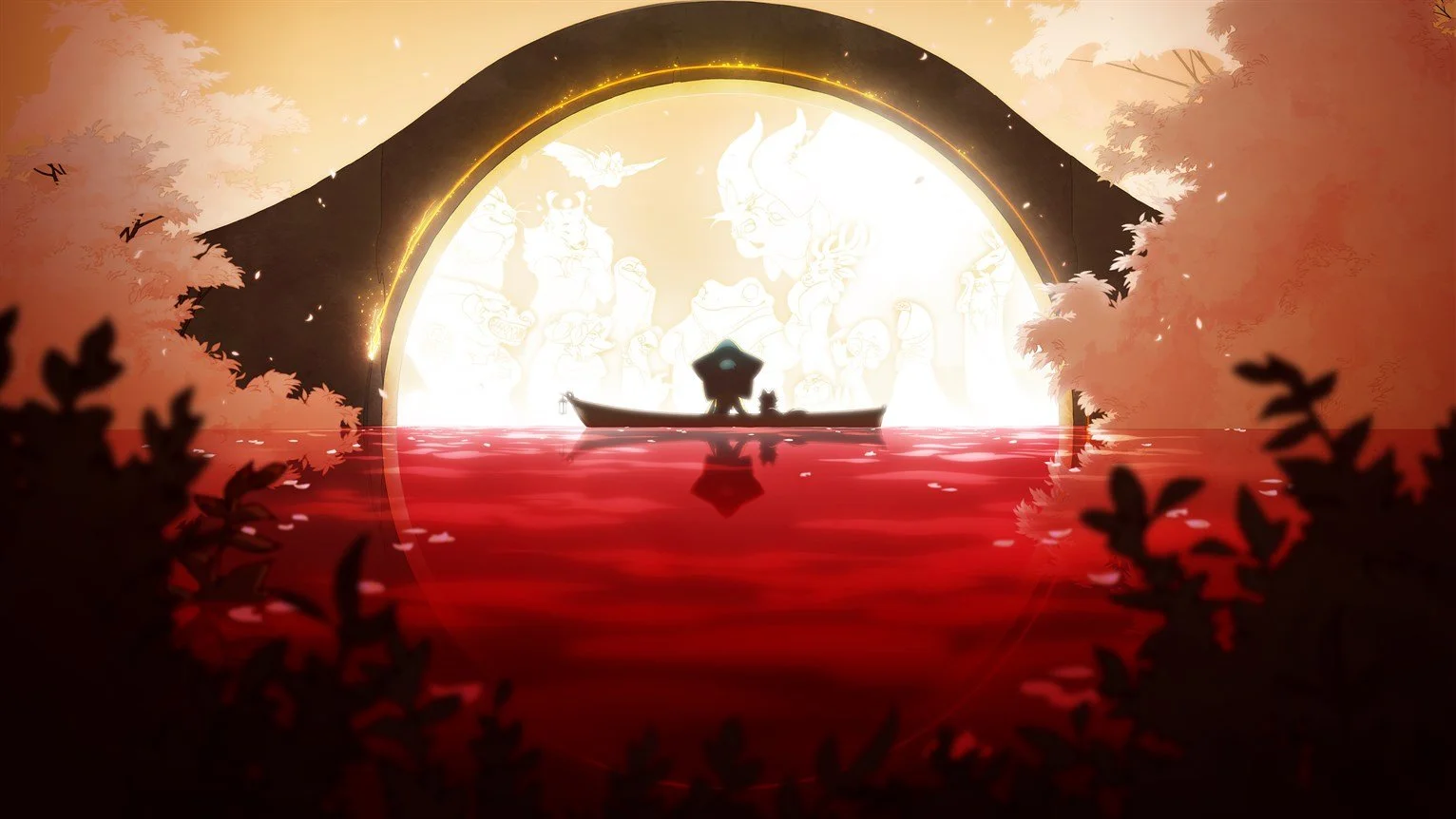
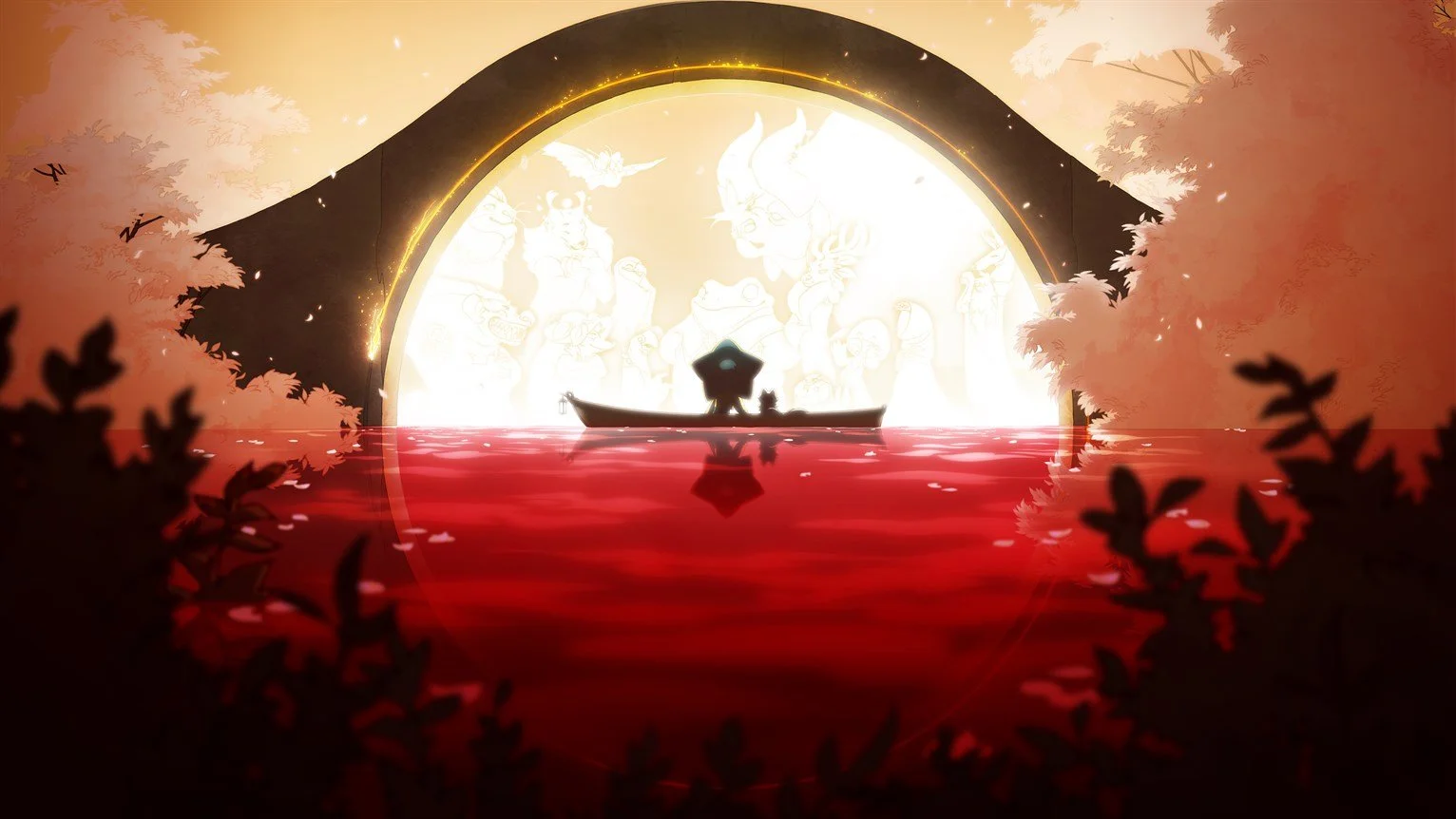
Spiritfarer is an independent video game developed by Thunder Lotus Games (2020). It celebrated its five-year anniversary in August 2025 and was released on all major platforms. The story follows a young girl named Stella, who becomes the new Spiritfarer, guiding souls from the living world to the afterlife through the Everdoor. To keep her passengers content until they are ready to move on, she must build rooms on her ship, fish, farm, cook, weave, gather wood, and smelt metal.
The game is widely praised for its hand-drawn artistic style and emotional storytelling, which is what drew me to choosing it for my reflection project. Spiritfarer has been described in many ways: some call it a management simulation, others say it is a sandbox platformer, and some describe it as a cozy town-builder. I also found one scholarly article describing it as a serious game about how individuals grieve the loss of loved ones (Glaser, Jensen, Riedy, Center, Shifflett, & Griffin, 2024).
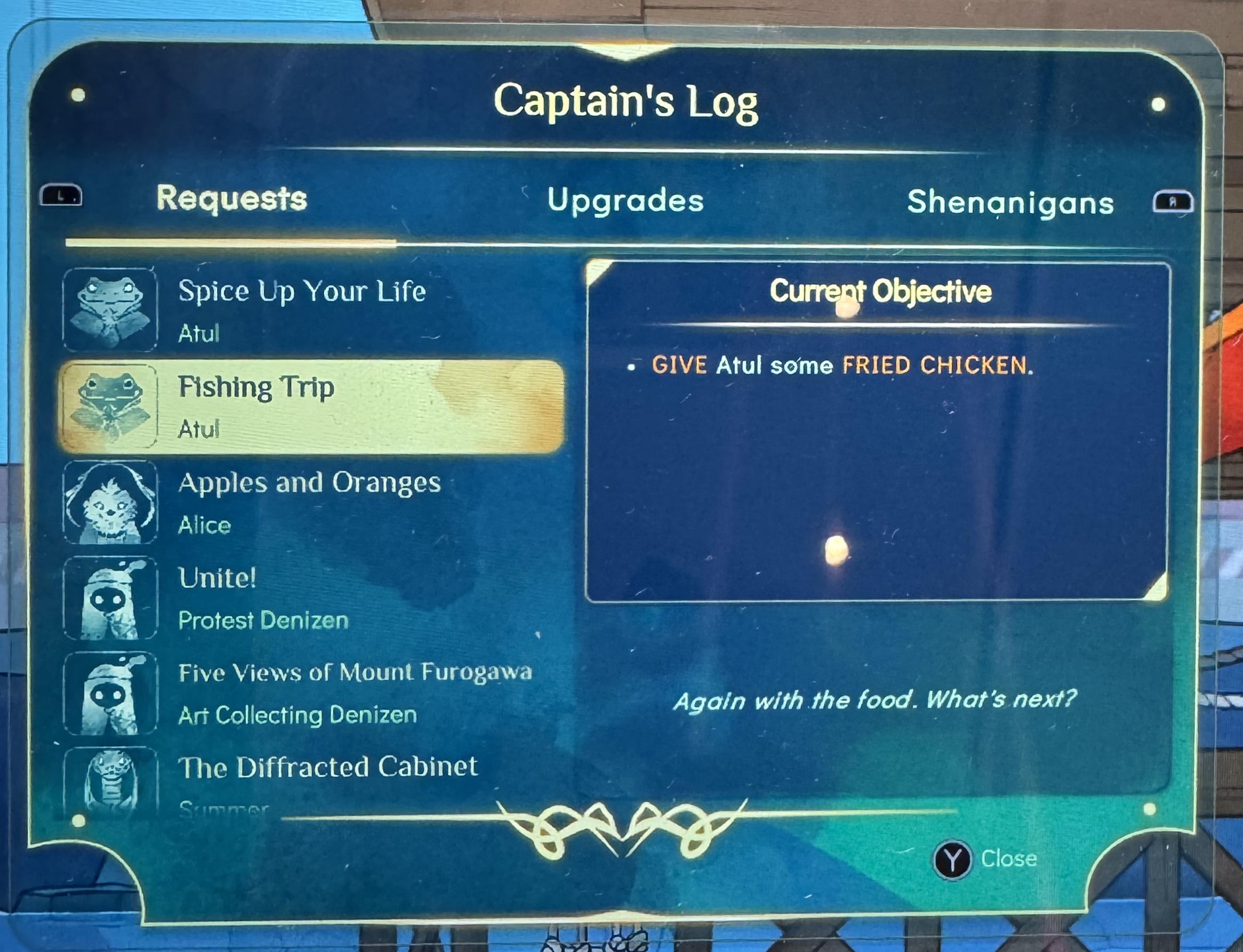
After playing for about sixty-five hours, I finished the game and can see why it is hard to categorize. Spiritfarer blends open-ended exploration with strict quest requirements that sometimes conflict, because players can complete certain objectives before the story allows them to progress. For example, one quest asked me to give one of the spirits, Atul, some fried chicken more than fifteen hours before I could collect all the needed ingredients. This created real roadblocks because the game alternates between feeling like a cozy management sandbox and a structured, rule-based game.
Now that I understand the difference between simulations and games, I would classify Spiritfarer as a game. It has a defined narrative arc, a clear beginning and end, and hundreds of mini-quests that must be completed in a specific order to move forward (Salen & Zimmerman, 2003).
Caption’s Log
Engagement and Emotional Experience
At first, Spiritfarer felt approachable, which was reassuring since I was nervous about this assignment. However, it quickly became time-consuming and complex. The mechanics were hard to grasp because there was very little instruction. After a week of playing, I realized most directions were hidden in quickly dismissed dialogue boxes. Players only get one chance to read quest information, and then the dialogues are untraceable. It felt like a real oversight for beginners, as though the designers cared more about story and visuals than clear guidance. I spent hours gathering resources, retracing steps, and solving tasks through trial and error. The experience was rewarding but also exhausting, like solving an endless puzzle.
That lack of clarity made the experience frustrating. You can play Spiritfarer like a cozy management game or dive into complex quests that are nearly impossible to solve without detailed note taking. I often turned to YouTube videos, forums, and needed to take detailed notes just to solve the maze of interconnected quests.
Emotional Foundations of Game-Based Learning explains that emotions such as enjoyment, frustration, and confusion strongly affect a learner’s motivation and information processing (Plass, Mayer, & Homer, 2020). Spiritfarer constantly moves between these emotions. When I solved a challenging puzzle or built something new on my ship, I felt a sense of achievement and joy. However, when quests were unclear or progress stalled, frustration and confusion took over. This supports the idea that emotions in games are dynamic and shift with the player’s experience and sense of control. This uneven difficulty often caused sharp emotional shifts between satisfaction and discouragement, which affected my motivation to keep going.
Cognitive Load
In Foundations of Game-Based Learning, it notes that designers need to manage the player’s cognitive load, balancing the mental effort spent on play with that spent on learning the game. Spiritfarer often felt overwhelming because of vague hints, complex sequences, and unclear progression. The dialogue between characters was written in a funny and emotional way, yet the in-game instructions and quest descriptions were often poorly written or missing altogether. This disconnect between story and gameplay made the experience feel confusing and difficult to manage. However, I did experience intrinsic motivation, wanting to overcome the vague quest structure to see what happened next.
It took so much effort to learn the nuances that I considered quitting the game twice. This suggests that Spiritfarer’s design may create extraneous cognitive load, making it harder for players to stay motivated and focus on the core game mechanics.
When I did complete a quest and move forward, it felt like a true accomplishment, mainly because I had overcome vague writing and missing directions. On Reddit, when other players raised similar frustrations, the designers said this was intentional, meant to make players feel like wandering spirits. I am not sure if that was an artistic decision or a way to excuse the lack of clarity.
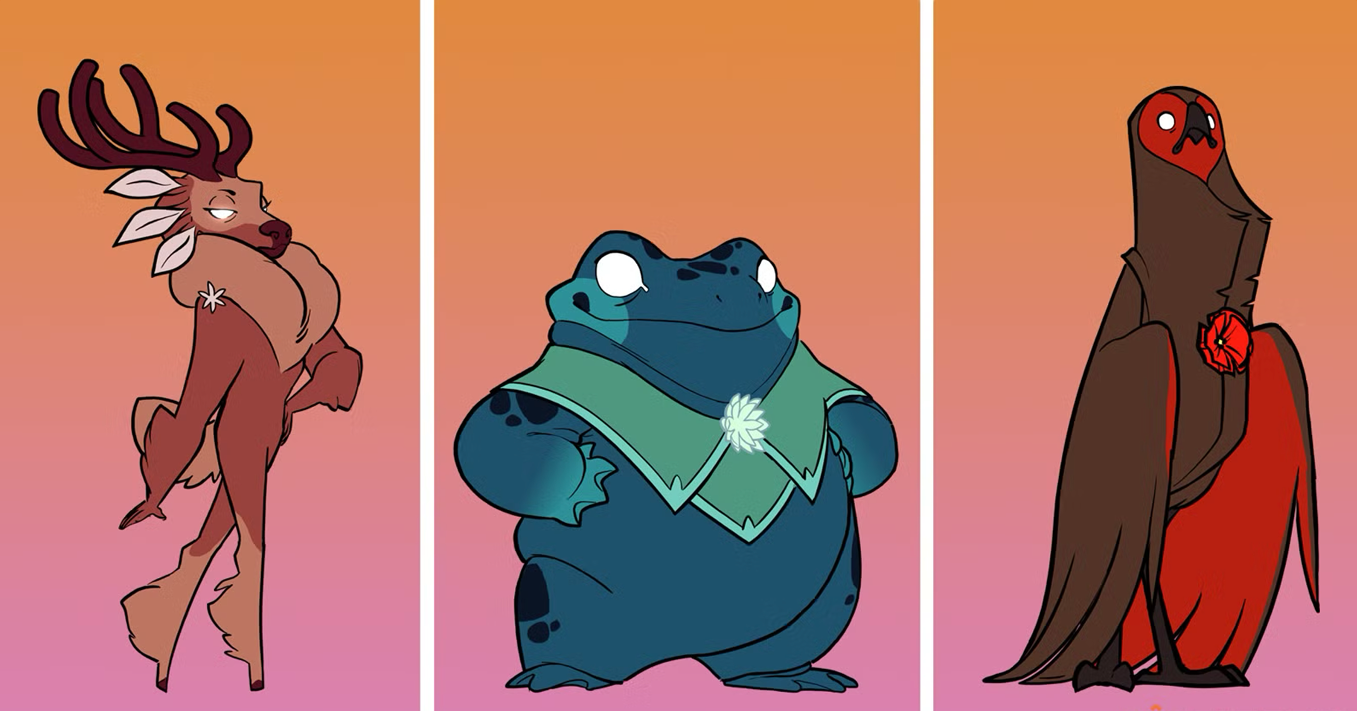
Spirit Characters from Spiritfarer
After completing the first four spirit quests to the Everdoor, I noticed that the quest structure became inconsistent. The levels of achievement felt out of sync, with difficulty jumping from easy to moderate, then suddenly very hard before returning to simple tasks. Well-designed games maintain a balanced progression of challenge, providing opportunities for controlled, productive failure and gradual mastery (Plass, Mayer, & Homer, 2020). In Spiritfarer, however, this progression was neither even nor controlled. This uneven pacing disrupted the game’s flow and made it hard to stay engaged.
The game also includes long animation sequences that make Spiritfarer feel more like an art exhibition than a video game. The pacing was so slow that I sometimes scrolled my phone while waiting to finish long sailing or sleeping animations. Sleeping is a major part of the game but serves little purpose other than giving the player a break.
From a user-experience perspective, it seemed that the developers designed by assumption without fully playtesting the game. As Fullerton (2019) explains, a playcentric approach depends on repeated testing to ensure clarity and engagement. In one Reddit post, the designers claimed that ambiguity was meant to evoke mystery, but without enough playtesting, that ambiguity simply caused confusion.
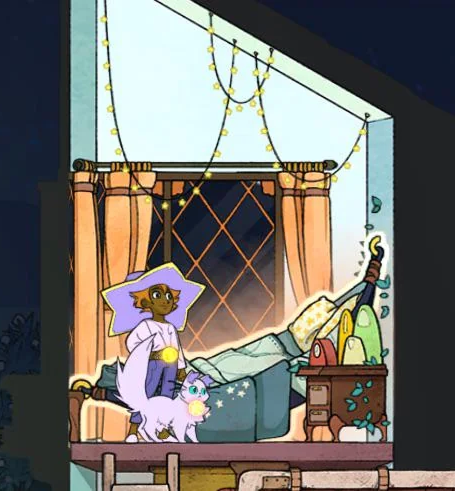
Stella getting ready to go to sleep
Game Mechanics
The core game mechanics are the rules and systems that shape a player's experience and determine the outcome of their actions. Mechanics are defined by how players move, collect resources, and interact with the environment.
Inventory and Resource Management
Spiritfarer combines elements of inventory and resource management, requiring players to collect, craft, and allocate materials to progress through quests and care for each spirit on board Stella’s ship. These materials are then used to build upgrades and complete new objectives.
Controls
The controls include selecting, deselecting, jumping, gliding, bouncing, running, sawing, picking up items, and entering or exiting spaces. The game creates what I would describe as “visceral delight overload.” There is constant planting, watering, harvesting vegetables, cutting and sawing trees, collecting ores, and smelting metal. Fishing is another frequent task, with dozens of fish and shellfish to catch. While these actions are repetitive, they are satisfying because Spiritfarer uses realistic, motion-based controls, for example moving the thumbstick back and forth to saw wood, which mimic the real motion and makes the gameplay feel more tactile and natural.
The game also uses a white contoured highlight effect to show when an element can be interacted with. This visual cue supports navigation and helps players identify important elements.
Character Maintenance
Stella’s main job is to keep the spirit passengers on her ship happy by feeding them and meeting their needs. A player must feed each spirit roughly every twenty minutes, similar to caring for a Tamagotchi. I’m not sure what happens if you neglect them because I always kept them happy. Despite the charm of the character maintenance, it often became tedious and made the game take much longer to play than expected.
Dialog Boxes
The on-screen messages, or UX toasts, were highly inconsistent. The game constantly reminds players of basic actions, such as “hold A to fish,” even after hundreds of repetitions. Yet, for complex interactions like smelting ore or cutting logs, a player is only told only once in a fleeting dialog box. Finally after weeks of playing, I began to take notes and started to read every line of dialogue carefully, because it was easy to miss important details. In some instances the game only gives a player one chance to read instructions with no repository of hints. The UX writing used to guide progression was often unclear, which added unnecessary confusion and made advancement more difficult than it needed to be.
Visual Design
The visual design determines how tools and functions are represented, and how feedback is displayed. It serves both a cognitive and aesthetic function. The visuals were a major reason I chose this game. The artistic style of the game has been compared to Spirited Away and other hand-drawn anime, featuring expressive faces with large eyes and detailed, emotive environments. Like most anime, the visual style not only creates beauty but also conveys deep emotion and cultural resonance. The consistent art direction makes the game feel warm and inviting, even when the tone of the story becomes emotional or heavy, allowing the player to stay immersed in its expressive, almost cinematic world.

Spiritfarer’s Visual Aesthetic
Musical Score and Sound Design
The musical score provides background sounds that guide the player’s attention, signal opportunities to respond, and highlight emotional moments in the story. While all of the music is original and well composed, many of the songs become repetitive and irritating to hear over time. I must not have been the only person frustrated by this, since there is an option in the menu to mute or skip certain songs during animation sequences.
The score succeeds most during emotional scenes. When guiding a spirit to the Everdoor, the music becomes gentle and reflective, perfectly matching the tone of a farewell. In these moments, the sound design enhances the sense of peace and closure, showing how audio can shape a player’s emotional response. Over time, players begin to associate specific sounds or musical motifs with certain feelings, such as soft chimes signaling the spirit has reached the Everdoor, creating a form of classical conditioning that deepens emotional immersion.
Narrative Elements
The narrative of Spiritfarer is its strongest feature. The story unfolds through cutscenes, dialogue, and player actions, advancing based on the player’s actions and the order in which quests are completed. The storyline connects the rules of play, characters, and events to create a coherent and emotional experience.
The emotional connection with the spirits generates strong social emotions such as empathy and compassion. These feelings emerge naturally as players care for the spirit passengers, listen to their stories, and help them find closure before they move on. The writing and character interactions turn what could have been a cozy management game into an emotional journey that explores themes of loss, forgiveness, and acceptance.
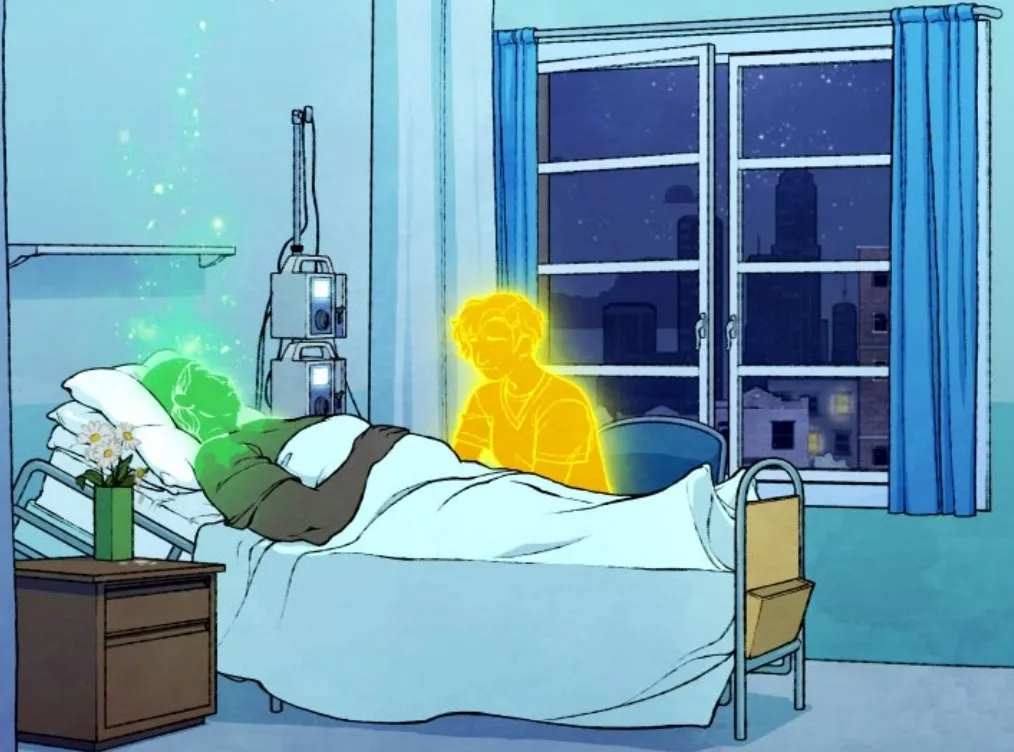
Cutscene from the Everdoor
The most powerful moments occur when it’s time to release a spirit to the Everdoor. These farewell scenes feature a montage of memories with loved ones, supported by cinematic visuals, sound, and haptic feedback that bring the experience to life. According to the Emotional Foundations framework, elements such as music, visuals, and narrative design strongly influence emotional engagement, which Spiritfarer demonstrates beautifully in these sequences.
Content and Skills
The content in Spiritfarer is rich and layered, with each spirit having a detailed backstory, unique personality, and specific preferences. Some storylines unfold across many in-game days, which can feel overwhelming or even strange at times. My favorite spirit was Atul, Stella’s uncle, whose story explains how he disappeared during his life. After about a week of playing, he suddenly vanishes again, which was both surprising and emotional since he is one of the most likable characters. The most difficult storyline to experience was the married couple, Astrid and Giovanni. Their quests required constant travel between islands while listening to long conversations about Giovanni’s infidelity, making it one of the least enjoyable story arcs.
As the game progressed, the required skills became more advanced. I reached a point where I had to master platforming abilities like jumping across narrow ledges and gliding through mist. These challenges became harder than I expected for a cozy game, which made me take breaks from playing.
Incentives and Rewards
Incentive design uses rewards to motivate players. These can be intrinsic, such as enjoyment, curiosity, or challenge, or extrinsic, such as currency, items, or upgrades. In Spiritfarer, players receive new blueprints, recipes, and materials as rewards for completing tasks. These incentives encourage continued exploration and help develop a sense of accomplishment, especially with elements of surprise via fishing and sailing, hunting, and searching villages. However, because some quests are unclear or overly repetitive, the sense of reward sometimes feels delayed or diminished.
Conclusion
There were times when the pace felt slow and repetitive, but Spiritfarer rewards players for their effort with new islands to explore, hundreds of quests, and new character storylines throughout the game. The game evokes a range of achievement emotions, such as enjoyment when completing tasks, and frustration or boredom when progress stalls. These shifts influence how motivated a player feels to continue.
If I were to offer feedback, my top suggestion would be clearer quest instructions and a way to revisit previous dialogue to reduce confusion. A quest log or replay option would help players stay organized and lessen the cognitive load of remembering each task. Another suggestion would be to improve the map labeling by adding coordinates or an index of islands. I spent a lot of time sailing aimlessly while trying to locate specific destinations among more than twenty locations.
A common frustration among players involves the long animation sequences. The designers eventually added skip buttons and mute options, which helped, but the pacing still slows the experience. This affects epistemic emotions such as curiosity and confusion, which can shift from intrigue to fatigue when pacing and clarity are not balanced. One of the game’s goals is to acquire new avatar skills, such as double jumping, gliding, or bouncing. Late in my playthrough, I realized I had missed an essential skill needed to advance. Since there is no index showing which skills a player has or are missing, I had to backtrack to figure out what I had overlooked.
Despite these challenges, Spiritfarer succeeds in creating strong social emotions through its interactions with the spirits. Feelings of empathy, compassion, and grief arise as players help each spirit find peace and guide them through the Everdoor. These moments are powerful and show how music, visuals, and storytelling can create deep emotional connections.
Even with its pacing issues and confusing quest structure, I thoroughly enjoyed Spiritfarer’s visuals and story. My final impression is that a great deal of care and attention went into developing the game’s content, characters, and storyline. The game’s emotional narrative and beautiful design set it apart and explain its lasting success in gaming culture.
References
Fullerton, T. (2019). Game design workshop: A playcentric approach to creating innovative games (4th ed.). CRC Press.
Glaser, N., Jensen, L., Riedy, T., Center, M., Shifflett, J., & Griffin, J. (2024). Spiritfarer and the emotional representation of grief in interactive media. Journal of Game Studies, 18(2), 45–60.
Plass, J. L., Mayer, R. E., & Homer, B. D. (Eds.). (2020). Handbook of game-based learning. The MIT Press.
Plass, J. L., Homer, B. D., & Kinzer, C. K. (2015). Foundations of game-based learning. Educational Psychologist, 50(4), 258–283. https://doi.org/10.1080/00461520.2015.1122533
Salen, K., & Zimmerman, E. (2003). Rules of play: Game design fundamentals. MIT Press.